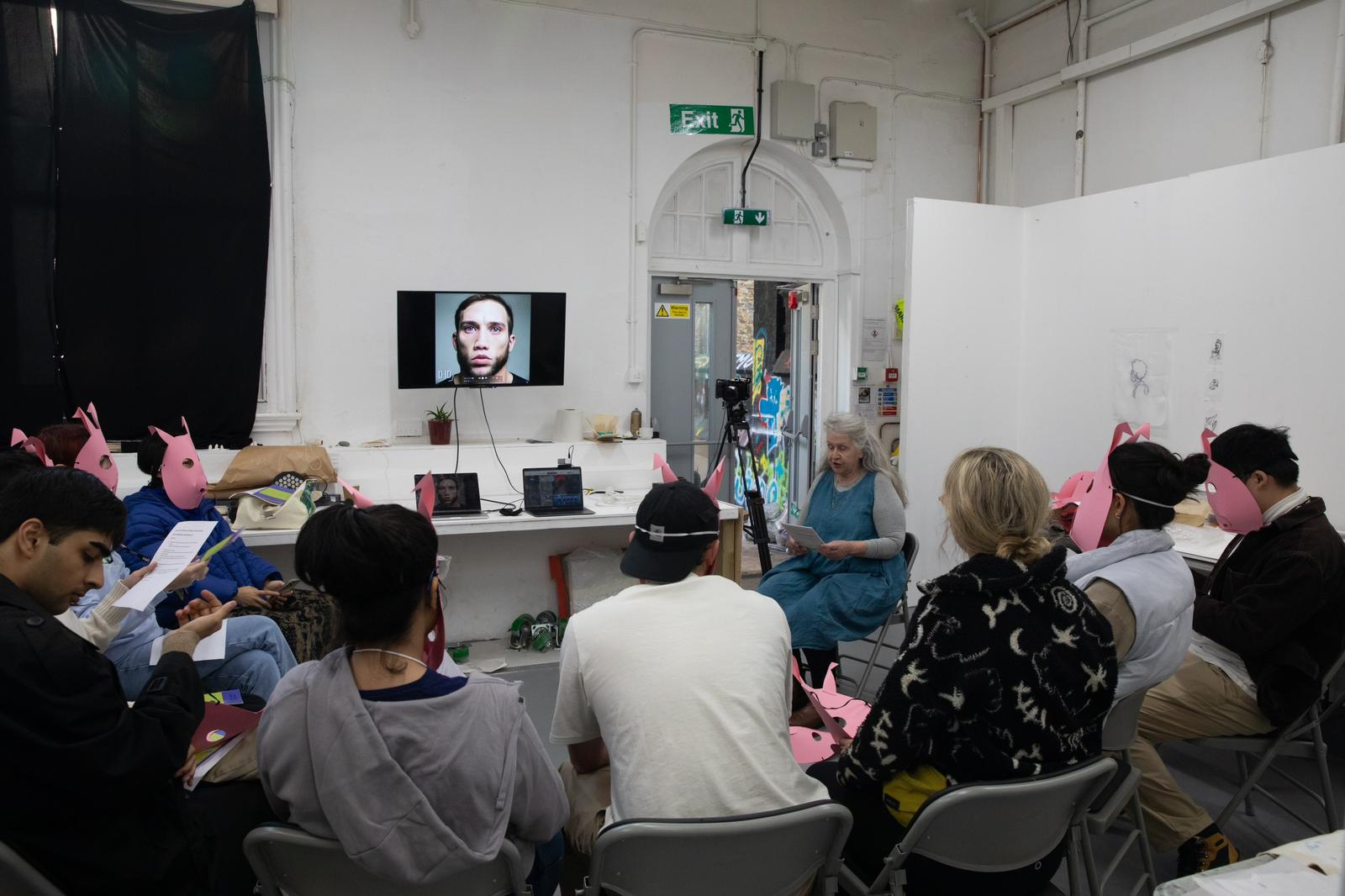
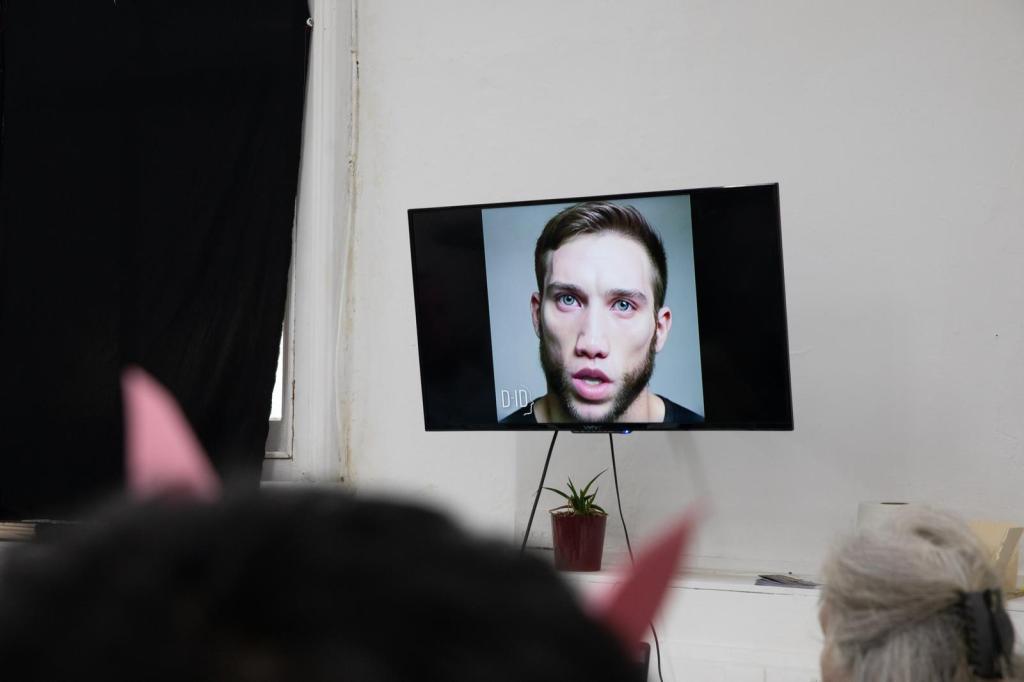
For the research festival 2023 I built on the idea of a Bioengineering gallery in the Museum of Human Violence to create a participatory performance event. 11 people took part. This included an introductory video created using ‘Blastersuite’ and ‘Speechelo’ for the sound (text written by me), D-ID creative reality suite to create the video, and ‘mid Journey’ software to generate the image.
Please find the video of the performance at the end of this page.
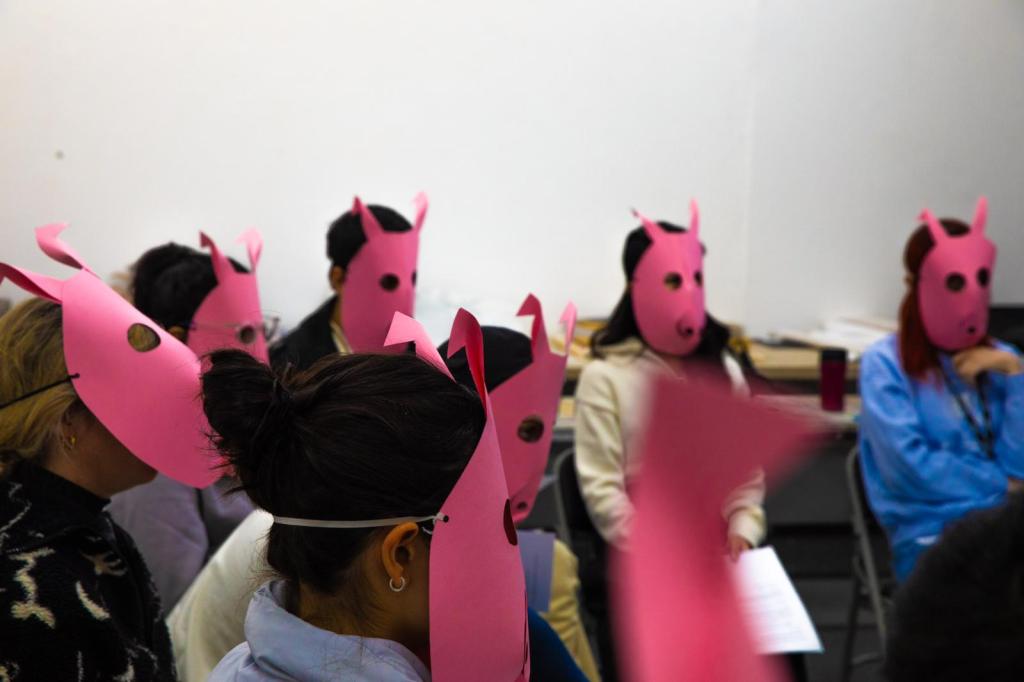
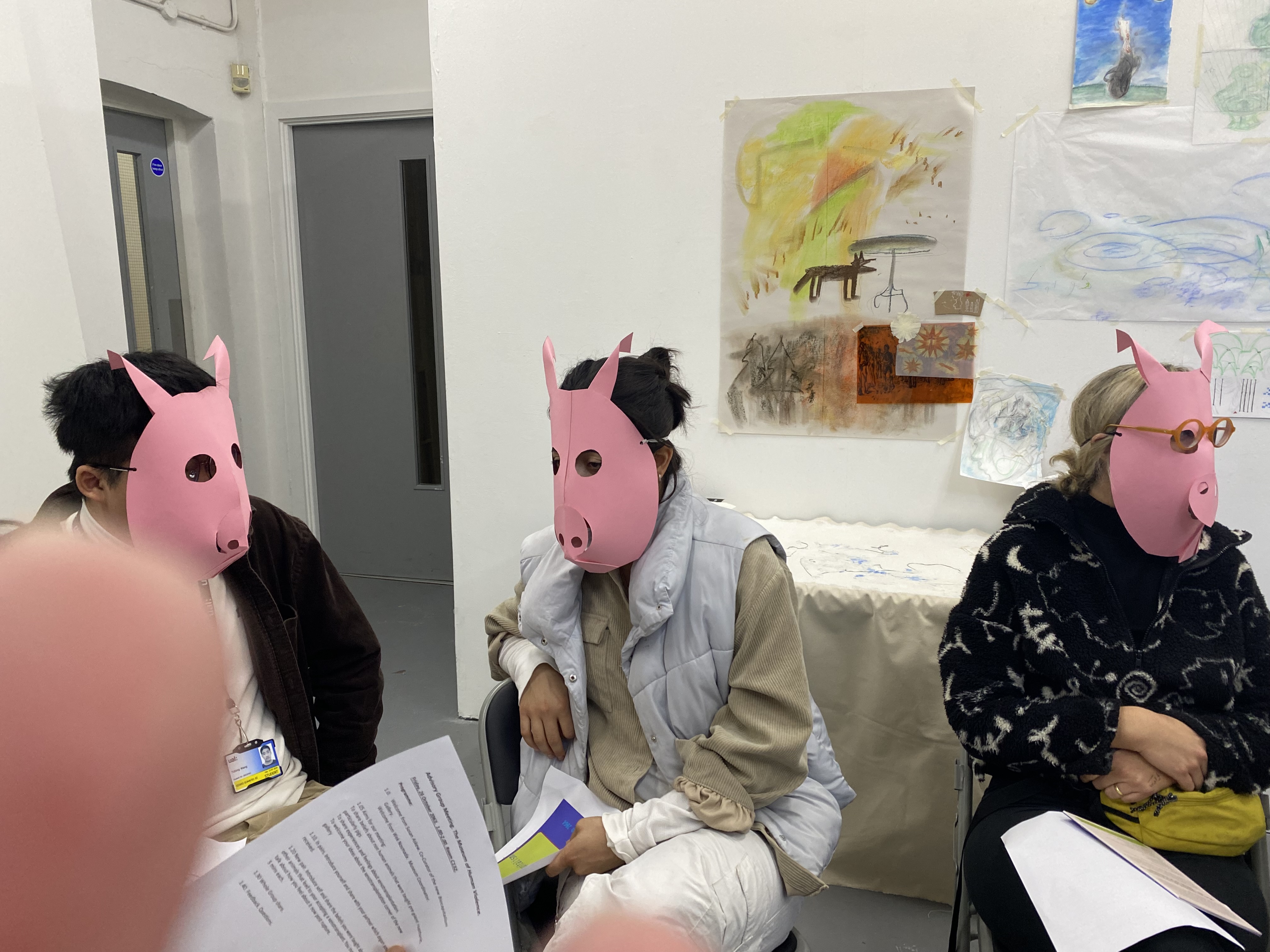
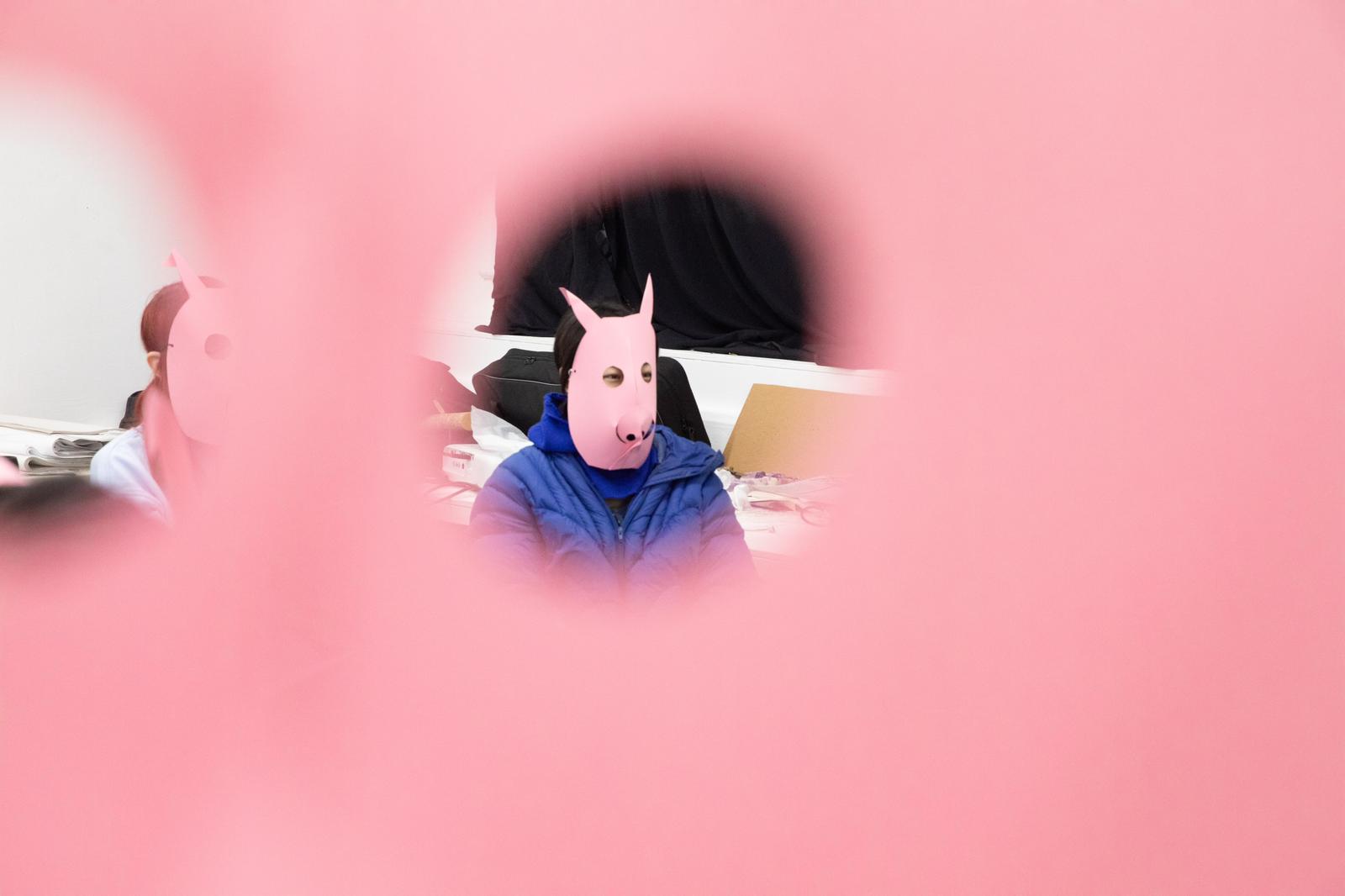
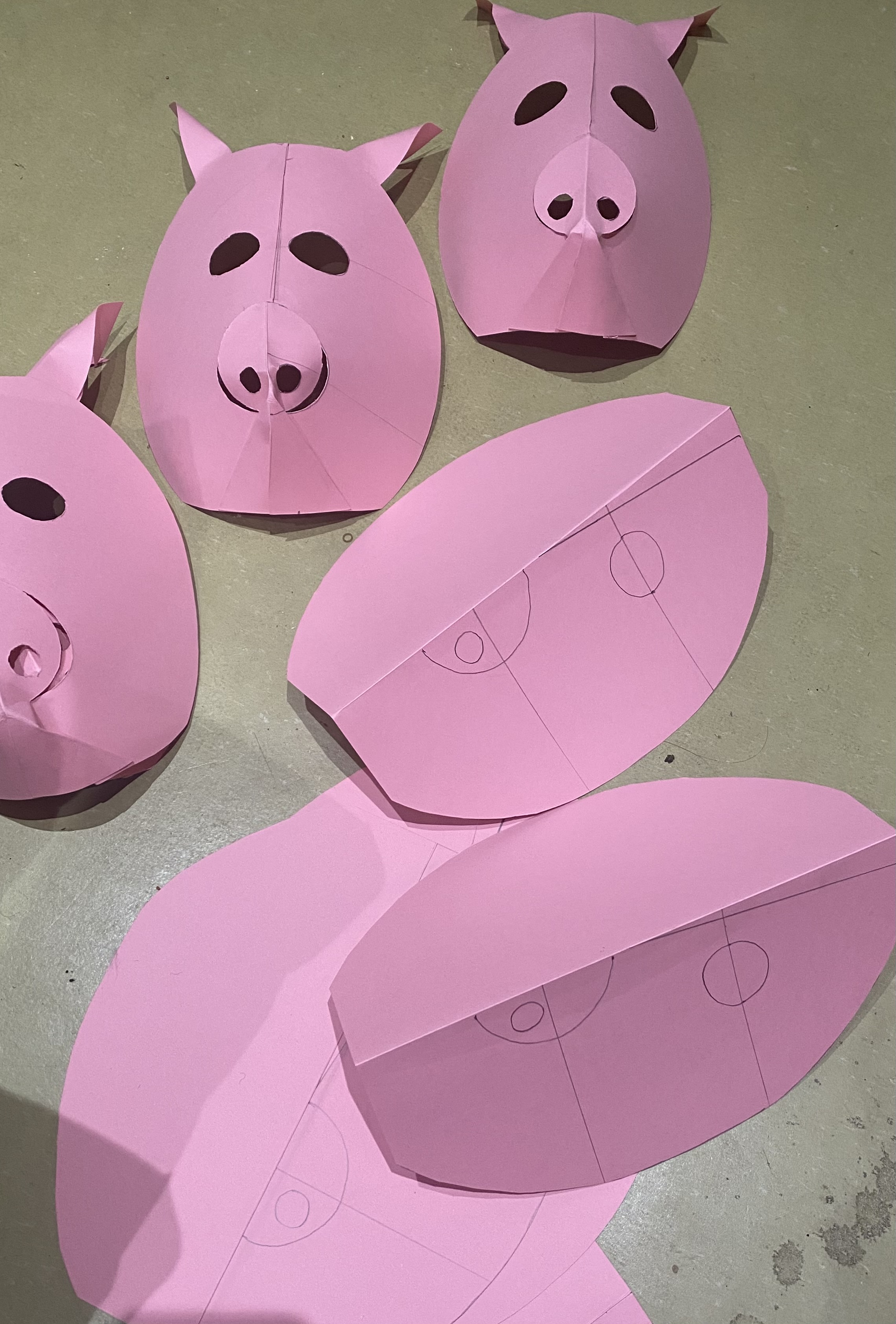
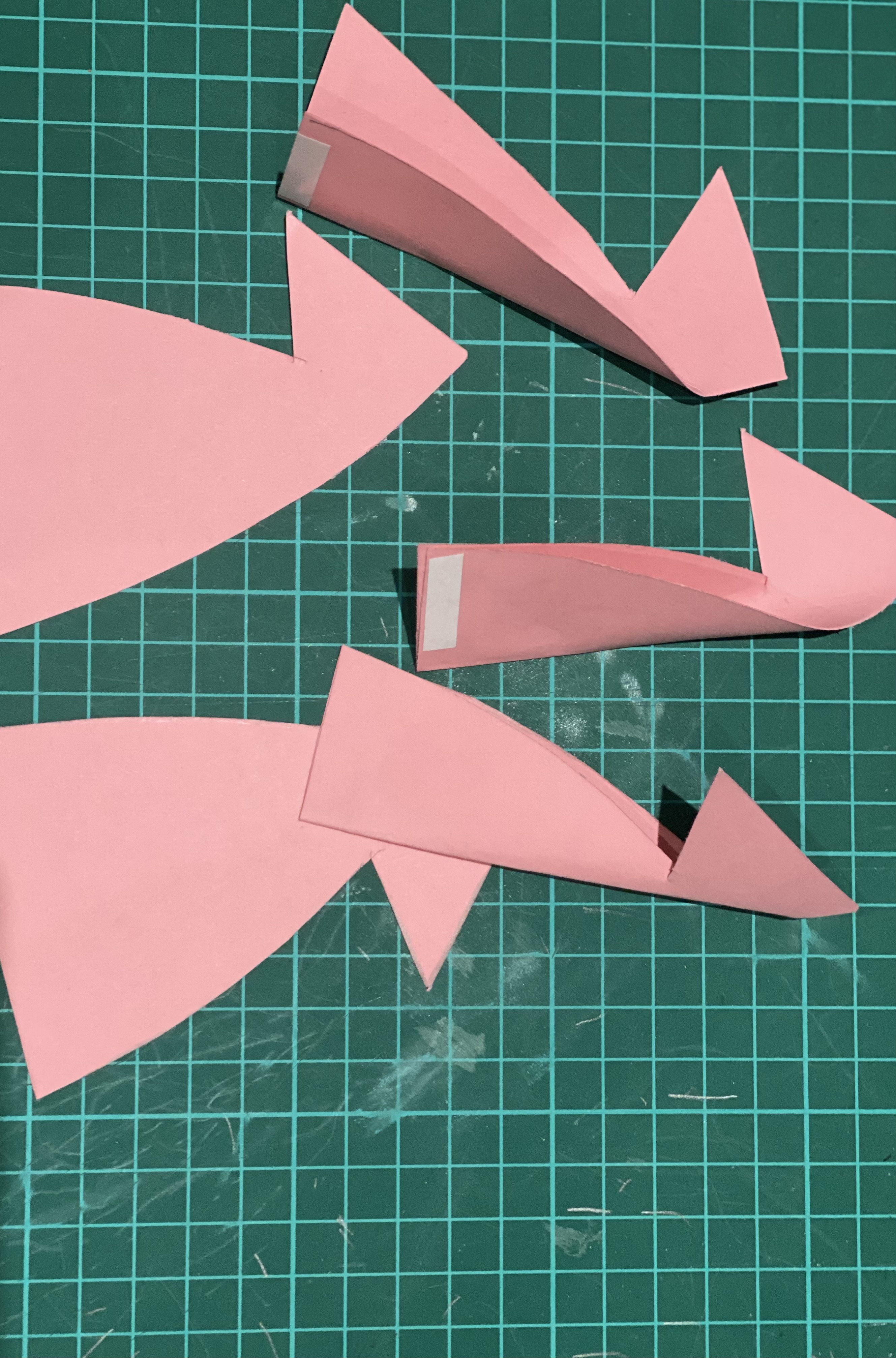
I made 13 cardboard masks that I did not ask the participants to wear, but left on the seats – everyone put one on. I provided a brief agenda, that included aims for the meeting. The meeting was recorded – see video below. Extracts of this meeting will be used in the ‘spot’ on xenotransplantation that will be the focus for the next gallery on biocapitalism. Gallery of images from performance below:
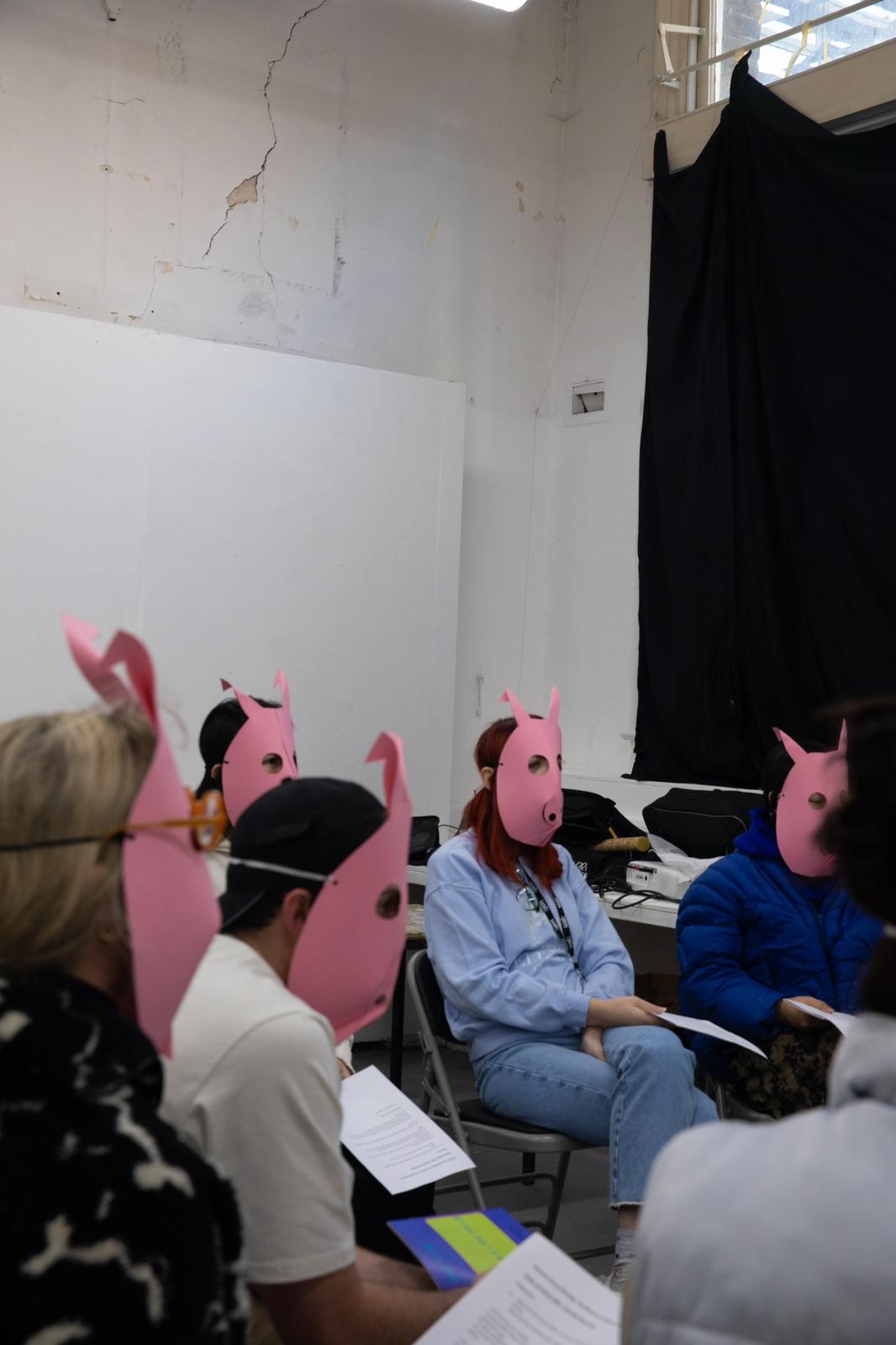
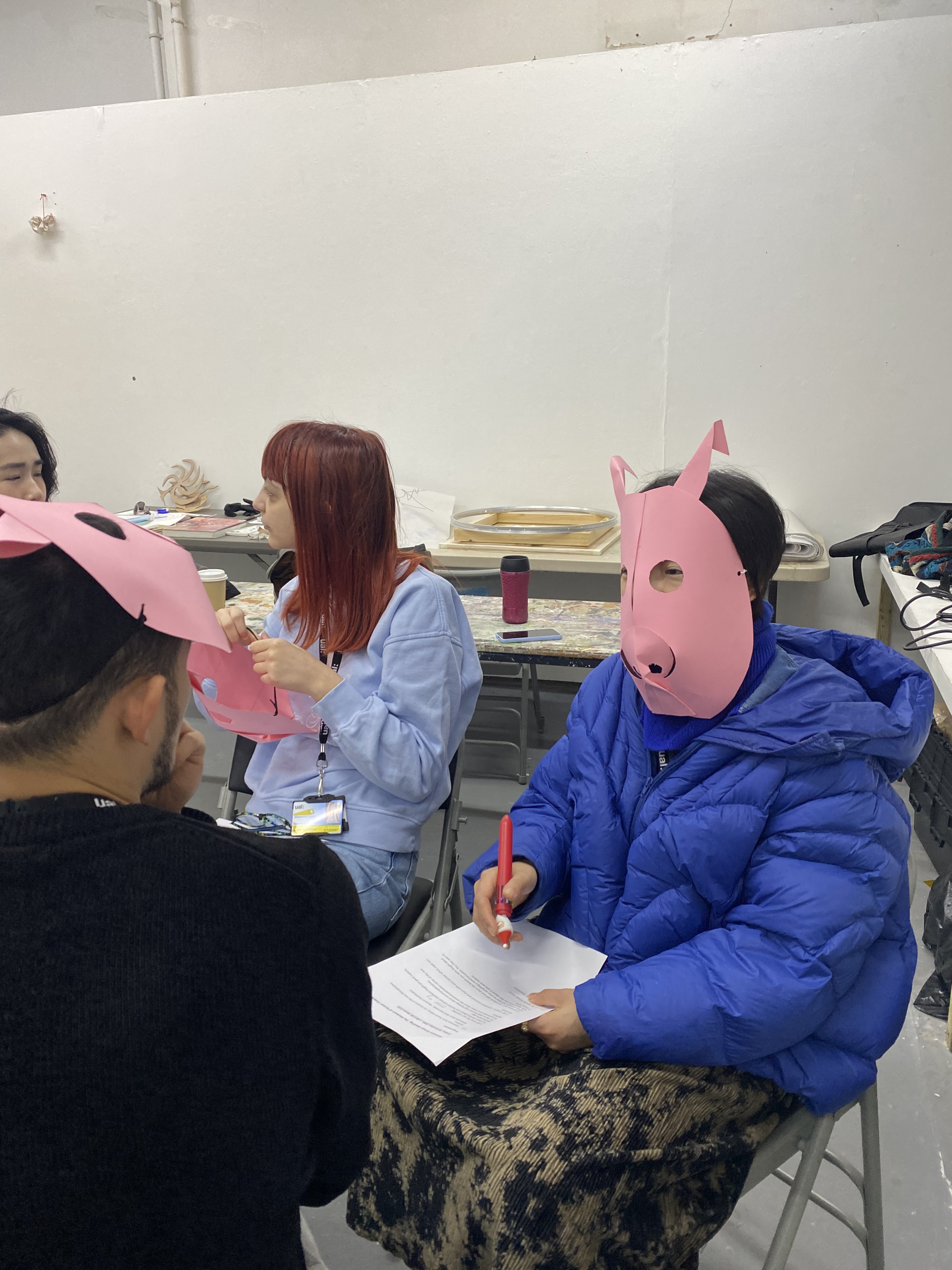
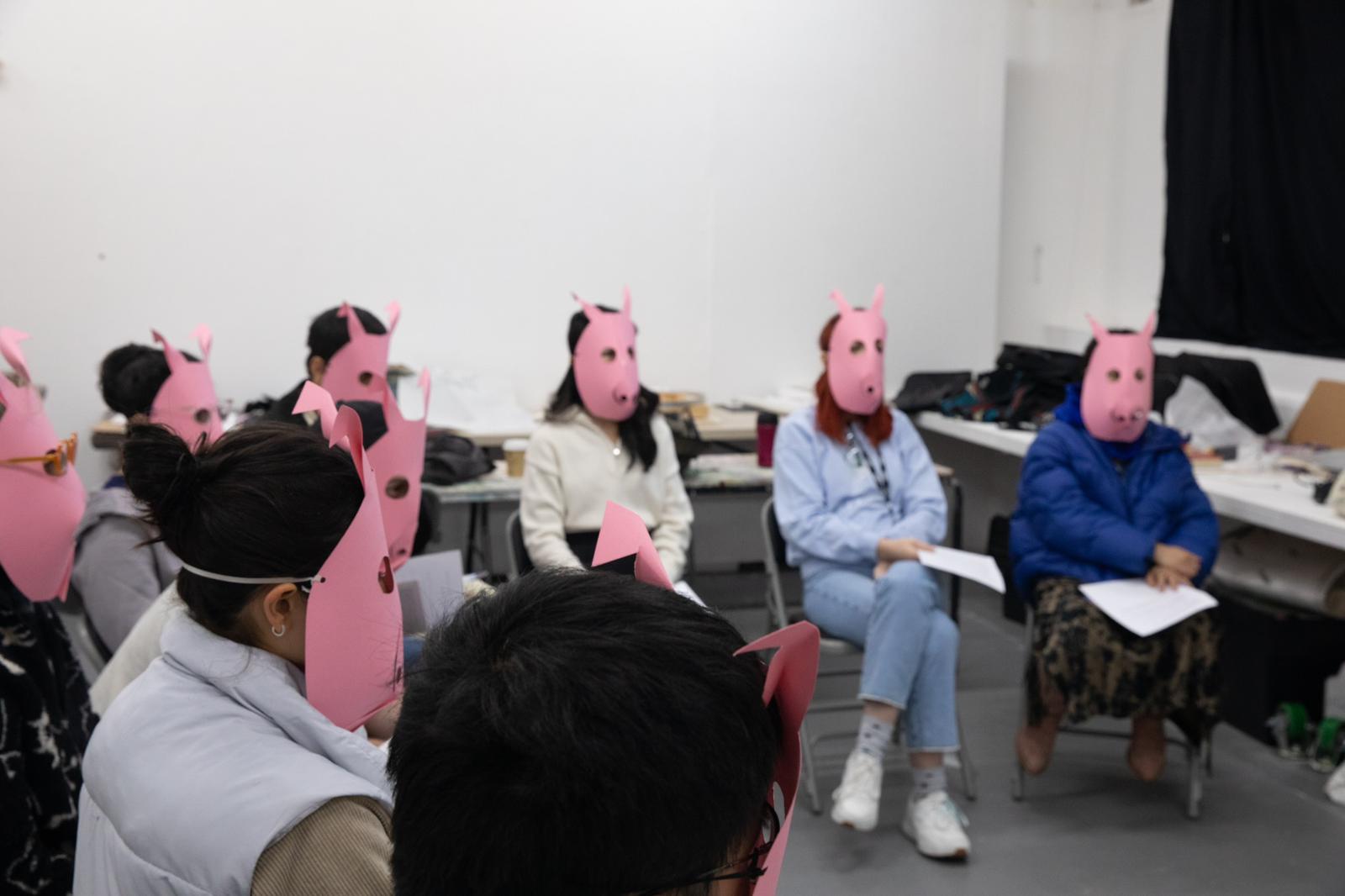
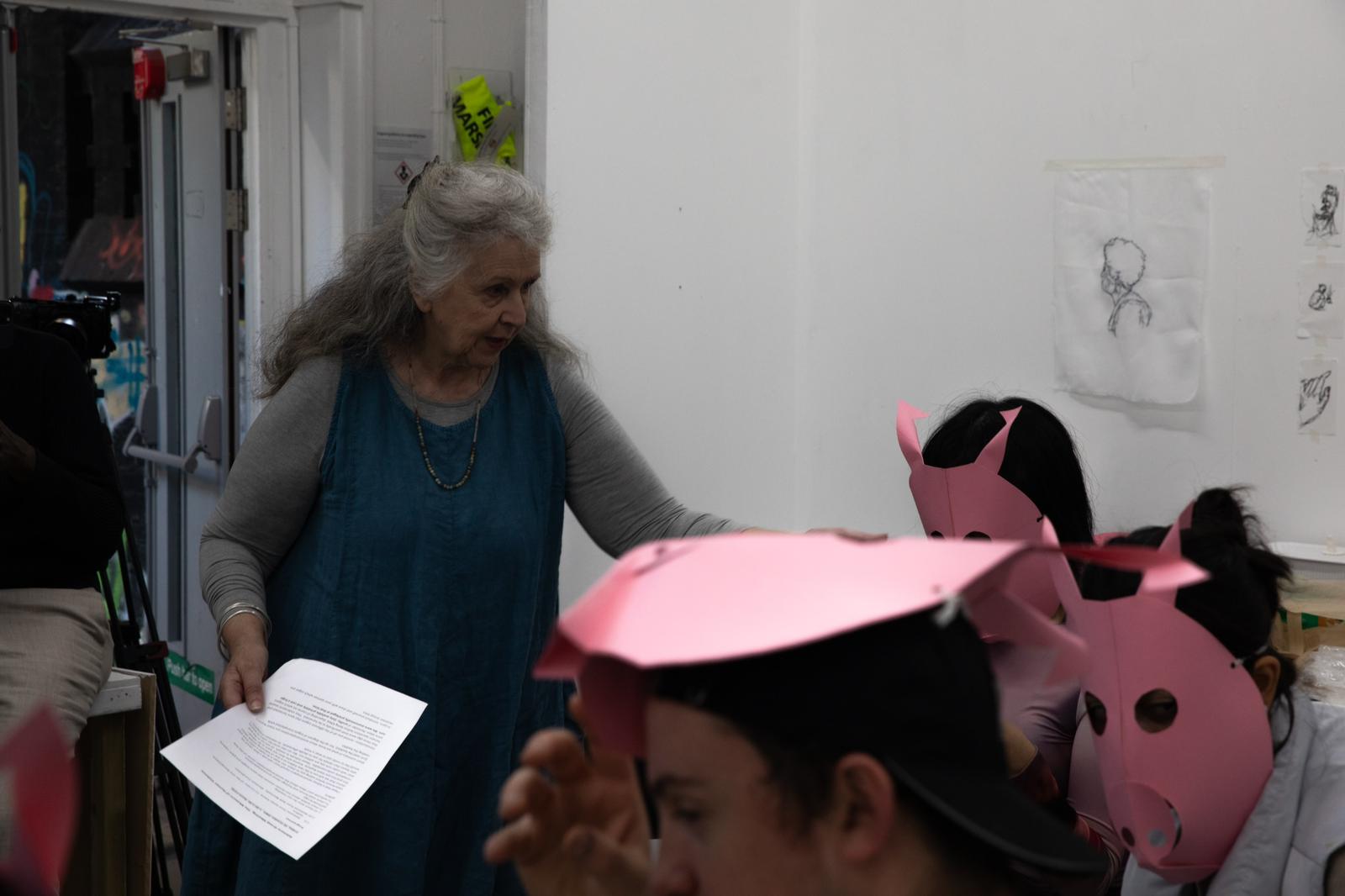
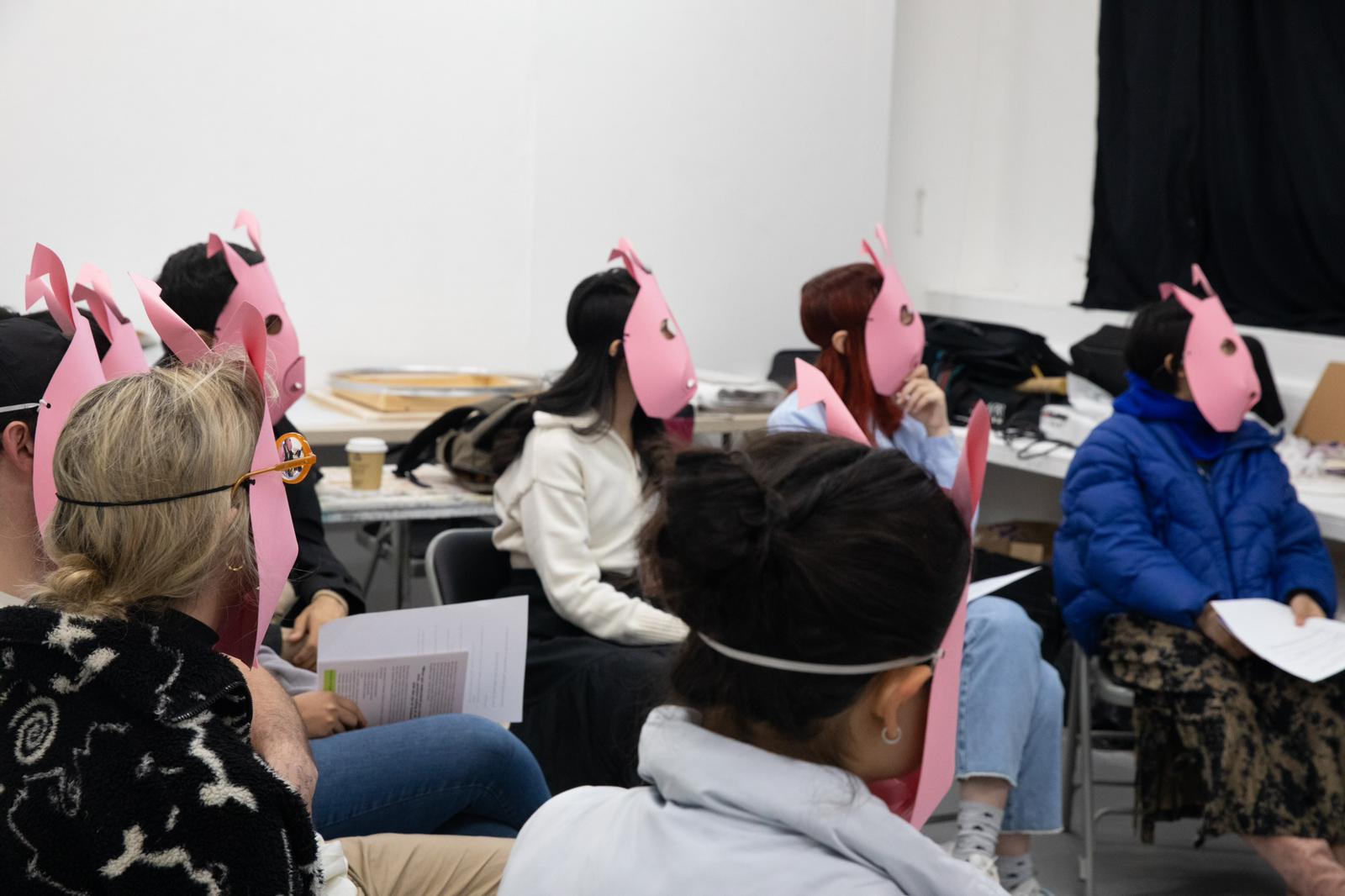
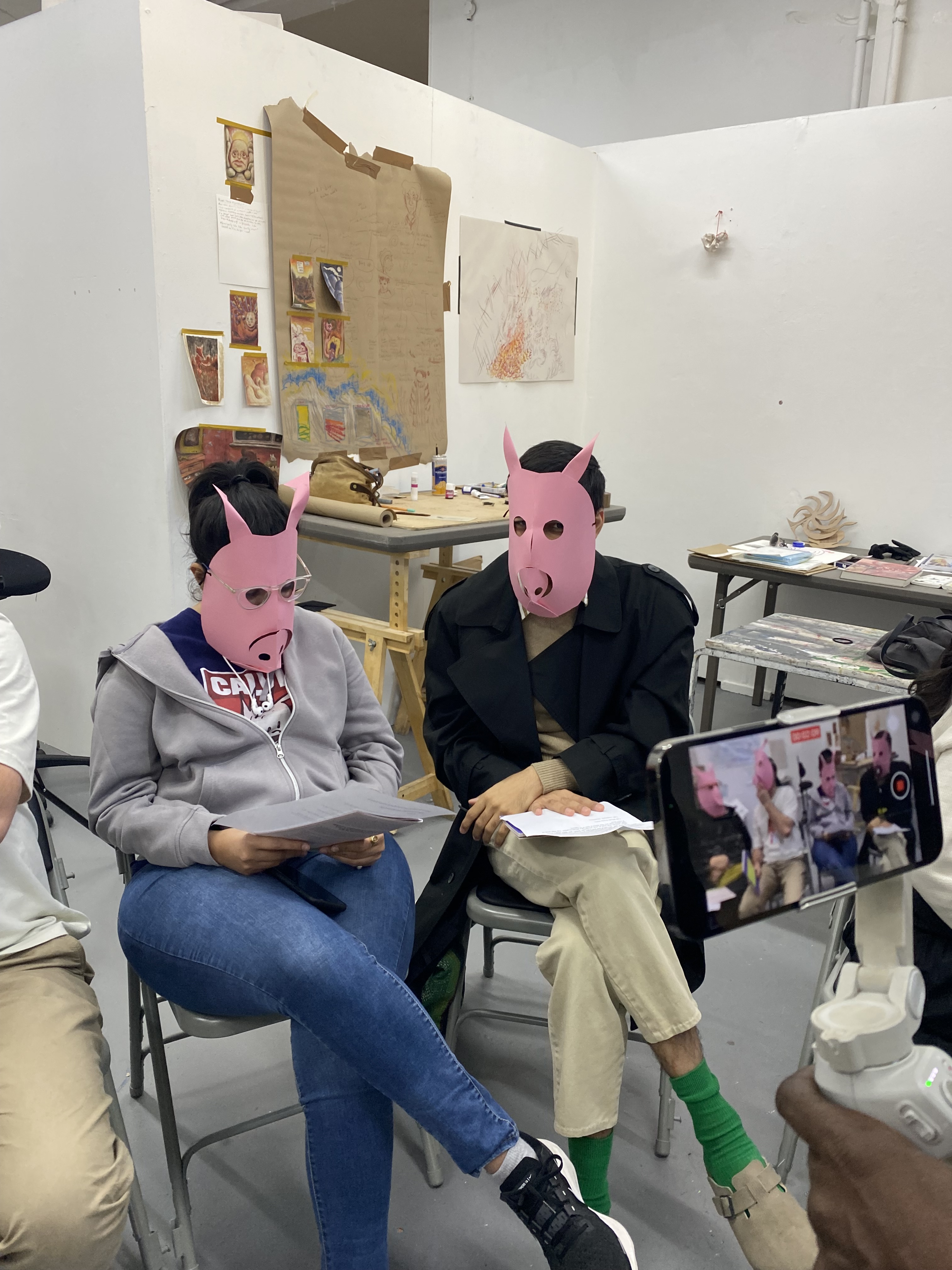
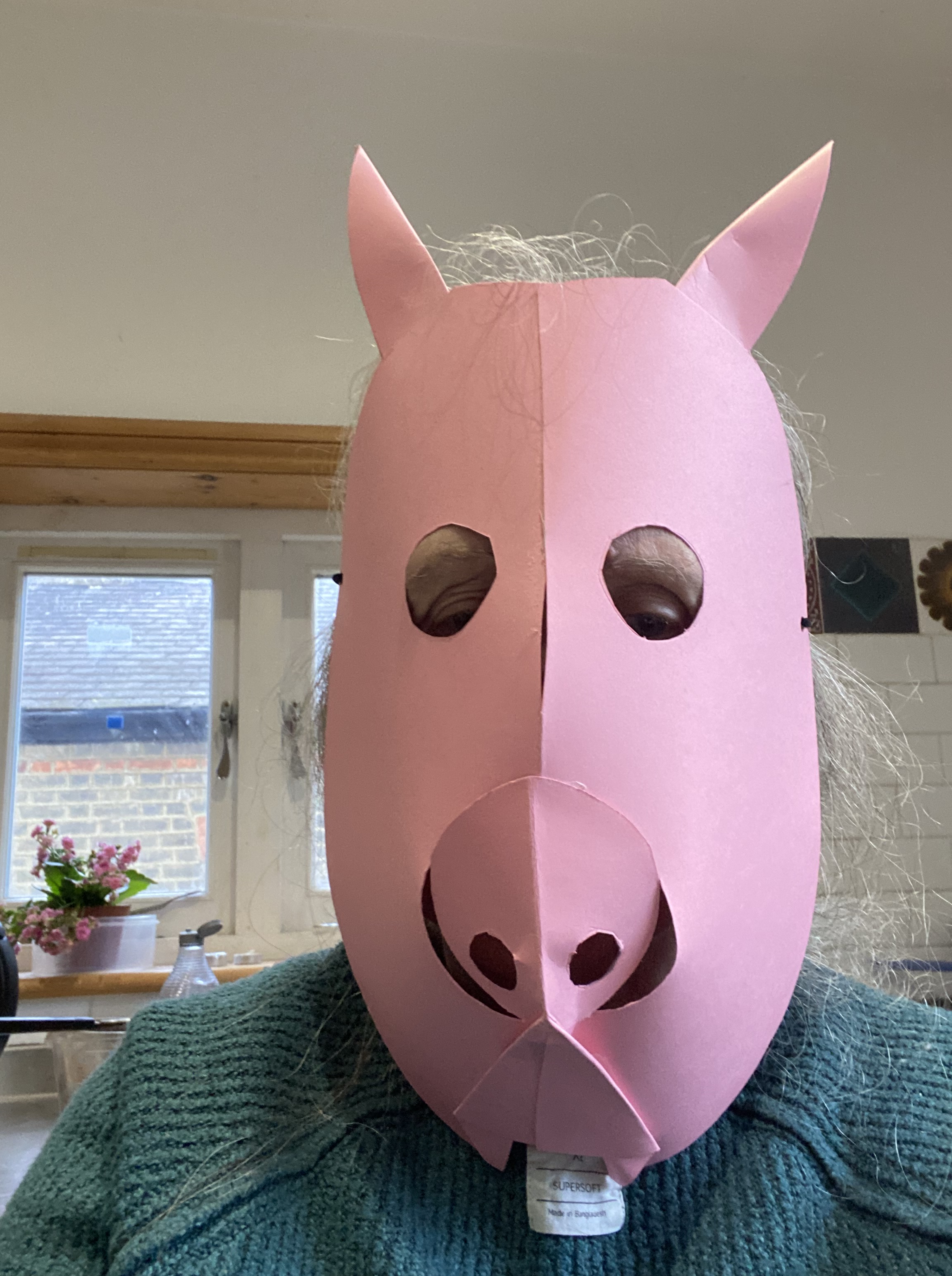
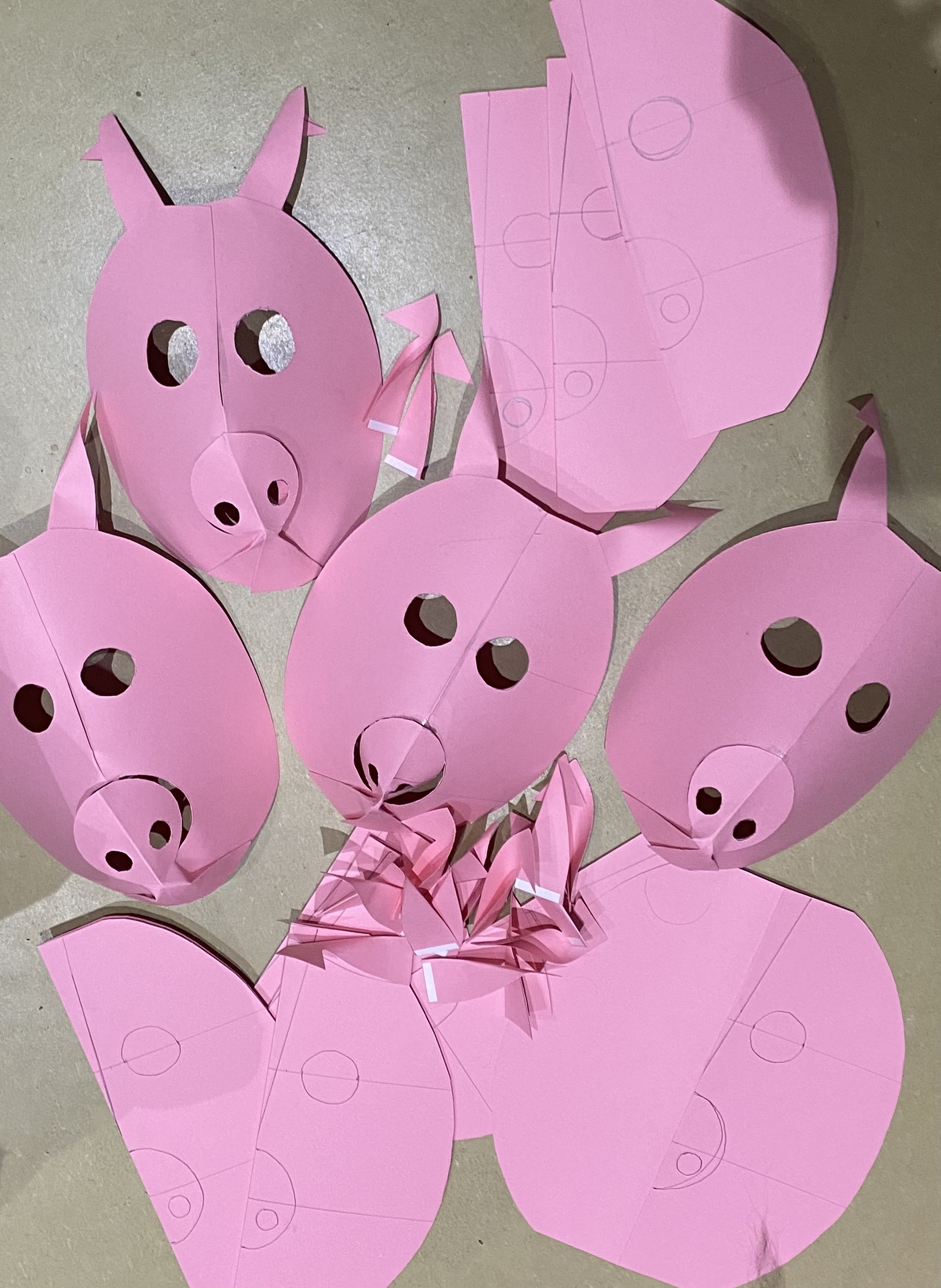
All images above courtesy of Zuojie Li (oli) except those of the masks in process.
Please see the agenda for the meeting below.
The ‘fiction’ in the performance is as follows:
- The Museum of Human Violence intends opening the new gallery on xenotransplantation in 2064
- This is part of the larger gallery on biocapitalism and focuses on the huge profits made from xenotransplantation along with the treatment of pigs in this industry.
- The Museum curators want to include the perspective of those people who survived the Giant Rupture and who received a xenotransplantation before it.
- Xenotransplantation in 2064 is illegal and regarded as totally unethical.
- People with a xenotransplant like to keep it secret because of the social stigma
- The Museum has put out a call for people to come forward to take part in a discussion which will be filmed and used in the gallery.
- The Museum has promised anonymity. This will be protected though mask wearing (every mask is new and made from paper).
- The session will start with introductions and pair sharing about the kind of xenotransplant the individuals had.
- Discussion which will be facilitated by a curator of the museum, will then focus on the beliefs people were taught abogut pigs that allowed them to think xenotransplantation was acceptable.
- Following this a brief activity will support people in sharing their feelings now.
- Throughout the discussion the curator will be sensitive to the bravery of the people coming forward to share their experiences, and at all times their wellbeing will be the priority.
 Drawing As Critique